
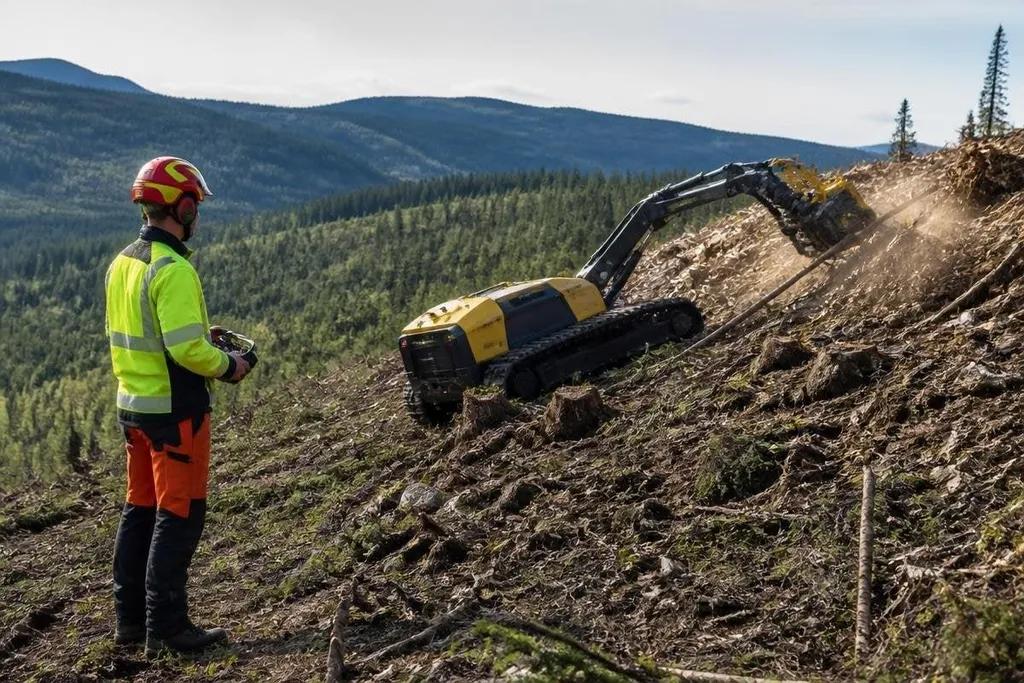
These machines could keep people away from unstable trees, steep ground, and areas where falling branches may cause injury. The useful question is where a machine can take over a task safely, and where a trained worker still needs to make the call.
- Remote control could keep operators away from falling timber.
- Cameras and LiDAR could map ground that is hard to inspect on foot.
- Human checks would still be needed before cutting or lifting.
The jobs that create the most risk
Tree felling, storm cleanup, and work on steep slopes all place people close to heavy moving material. A robot with tracks could carry tools across rough ground while an operator works from a safer position.
The machine would still face the same physical hazards. A tree can move as its weight changes, hidden branches can fall, and wet soil can lose grip under a tracked vehicle. Remote control reduces the operator’s exposure, but it doesn’t remove the need to read the site correctly.
That makes remote operation a useful link between automation and normal forestry work. The operator can watch camera feeds, check the robot’s position, and stop the machine when the ground or tree behaves differently than expected.
How the machines could work
Several systems would need to work together on a forestry robot. Cameras could show branches and cut lines, while LiDAR measures distance and builds a map of nearby trunks, rocks, and slopes.
That map helps the operator plan movement without walking into the work area first. The robot could also carry a saw, winch, claw, or inspection sensor, and each tool changes the safety problem.
A claw that moves logs needs enough grip and lift force, while a saw needs control that keeps the cutting tool away from people and the robot’s own frame. Power is another limit: tracks, motors, sensors, radio links, and tools all draw energy.
A robot that stops often to charge may protect one worker from one task while adding delays and recovery work for another worker.
Steep ground and weak radio links can change what a forestry robot asks from its operator. Forestry robotics reporting can tie a remote task to the slope, load, test date, and worker action that followed, leading into the limits of human control.
Where human control still matters
Forestry sites change from one metre to the next. A map made before work starts may miss a loose stone, a broken limb, or a soft patch beneath leaves. The robot needs a person who can spot those changes and stop the machine in time.
Autonomous movement also needs a clear safety boundary. The system must know where people are, keep a safe distance from moving tools, and stop after a lost radio signal. Those rules need testing on real ground, in rain, dust, low light, and heavy plant cover.
A demo that drives across a prepared clearing proves less than a system that works around fallen trees and changing slopes. Until operators publish site results, work hours, stop events, and maintenance records, the safety case remains incomplete.
A practical test for forestry buyers
A forestry manager comparing a robot for worker safety can start with these checks:
- Map the task: name the exact job, hazard, tool, and distance between the worker and the machine.
- Check the link: confirm how the robot stops after lost radio contact and how far the operator can work from the site.
- Test the ground: run the machine on slopes, wet soil, loose debris, and ground covered by leaves.
- Watch the tool: measure where the saw, claw, or winch can move when the robot loses grip or changes position.
- Record the work: log operator hours, stop events, battery changes, repairs, and near misses during each trial.
These records show whether the robot reduces exposure or only moves the risk to setup, recovery, and maintenance. They also give a buyer facts for training and site rules.
What happens next
I'd back forestry robots first in inspection, storm cleanup, and remote tool work, where distance can reduce exposure without asking the machine to make every decision. Cutting trees without close human control needs a much higher level of proof.
The next useful result will be a field record with operating hours, failed stops, weather conditions, and worker exposure. Until those numbers are public, forestry robots are promising safety equipment in testing, not a replacement for a trained forestry crew.